What Being Social is All About


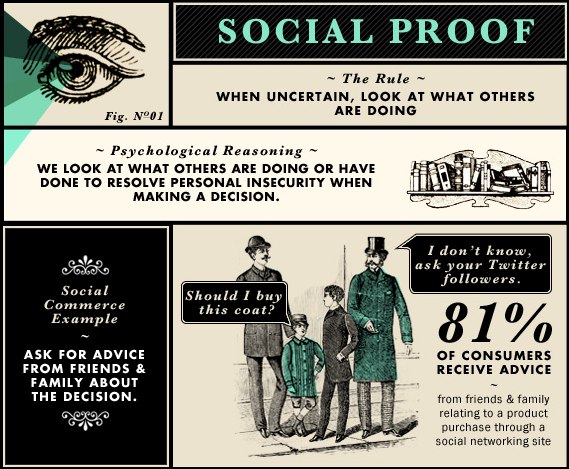
I came across these cool graphics on theFast Company website. The accompanying article is really wordy and sort of reminds me of a Power Point presentation where the dude reads off the slides for the whole meeting. This meeting was brought to you by the Department of Redundancy Department. The slides are self-explanatory and lovely to look at.


An Interactive Tragedy Part 1

Several years ago I worked for a marketing firm that specialized in print for a well-funded, loyal niche market. Agency X had it locked up…  the sales force was recruited straight from the target industry and were well-connected, the loyalty factor in this industry was very high, and the methodology was tried and true. Best of all, the profit margins were astronomical because the actual cost of producing the deliverables was a fraction of the billing. The methodology was a simple ad agency boilerplate:

  • Account executives would set up the appropriate appointments
  • They, along with the creative team, would conduct discovery interviews
  • They would produce what they called a “discovery document” that talked about the nature of the the business as it related to the campaign
  • The document would be presented and then go through some revision cycles until final approval was given
  • The creative team would be dispatched to create assets such as logos, photos, etc. Copy and taglines would be written. At some point focus groups might be used, but more often than not approval was up to stakeholders
  • Final approval of the project, production and delivery.

This model worked fine for branding and printed material. Advertising could also be engaged, as well as video production for message-based commercials.

And then what happened? Somebody mentioned the website. Can Agency X also do our website?

Sure, said the agency. We’ll just hire some web designers. We can launch this site based on the campaign. It will be great.

And they did just that…  Web designers were brought in, billings were increased and everything was hunky dory until one day a client got a look at another agency’s work, an interactive agency’s work, for a competitor. Remember, this is a niche industry, and an insular one at that. The client, being loyal, asked the account exec at Agency X why this competitor’s website was so superior when they were paying Agency X top dollar.

Um.

Thus began a long and disastrous attempt to educate the account executives about the vast differences between interactive media and its more traditional counterpart. The thing that was hard for them to grasp was the fundamental difference between traditional and interactive media: the user. In interactive media, the user needs to be included in the earliest conversations. A new role was defined to help facilitate this inclusion. Enter the interactive strategist.

Right from the beginning there was trouble.

Google Penguin

Found this press release today.


Google Penguin Update Will Affect Many SEO Companies, Marketing Expert Fiona Lewis Believes

PR Web

Sydney, Australia (PRWEB) September 05, 2012

It is true that many (and major) SEO companies have grown complacent during the last years and that they have been optimizing for search engines in ways that are not very Googthodox.

However, this month a new announcement came from Google and the phrase which is now terrifying the World Wide Web is ‘you don’t want the next Penguin update’, uttered by Matt Cutts, Google specialist in SEO issues.

While nobody knows what he really means, Fiona Lewis and many other internet marketing experts are already wondering about the future of SEO companies who have been cheating their ways into good rankings.

The update has already received several nicknames such as ‘Googageddon’ or ‘carnage’, but the latter seems to resonate the most with people. When asked about her opinion on this denomination, Ms Lewis answered, “It will be carnage for many companies and business owners. I feel sorry especially for the businesses that pay good money to slack SEO companies who didn’t see this coming.”

According to Ms Lewis, SEO companies have about three months to get things straight with their practices before their clients will start noticing problems. Fiona Lewis puts the blame on the SEOers who have been lazily crawling their clients’ websites to the top: “The worst part is that they have been doing bad practise for so long and were lazy, and business owners trust the SEO companies are doing the right thing.”

What seems to be the end of many SEO companies, will be, however, a good thing for those using Google as their search engine. It is predicted that Google will show random or unexpected results which will not affect the everyday user, but it will affect a website’s ranking.

In a nutshell, while internet users will not suffer from this update, it is the SEO companies and their clients who will have to deal with the consequences.

Synergy with Analytics and Marketing

As I have said in an earlier post, analytics should be a powerful component of your overall marketing strategy from the start. Properly used, they can show you how your customers are reacting to your efforts to attract them. This is great information for a whole host of reasons, not the least of which is to know when you’re barking up the wrong tree.

Nothing feels quite as bad as having to justify a loss incurred by an unsuccessful campaign, particularly if you had tools at your disposal that could have warned you of its ineffectiveness before you were completely committed.

Analytics, therefore, should be factored into online and offline marketing efforts from the very start. To properly set up analytics, though, you need to know the places where they can be of most use. Initially, there are three main areas where they can help:

1.      Keywords

For the uninitiated, keywords are the search words with which users find your site. The right keywords will drive the right traffic to your site  ultimately help both your customers and you by giving site visitors what they want and need.

Analytics provide you with insight into which keywords are effective and which keywords are not. A word or phrase that you believe accurately describes your product may not be  the one used by your customers.  Searches can also be affected by context in which the keyword is used. This is especially true now that Google has implemented Penguin, an artificial intelligence-based system that goes a long way toward assessing websites’ value in the same way as real life customers. (I will address Penguin and its impact for SEO in a later column.)

So which keywords are the best for your site? You can use analytics to easily determine this by checking

  1. Which keywords drive traffic to your site
  2. Which keywords drive conversions
  3. Which keywords drive traffic but no conversions

Determining the difference between numbers one and three will give you the answers you need and will  help you adjust your course.  Check the following:

  1. Does the keyword describe your product?
  2. Is the keyword too broad?
  3. Does your site offer quality content around the keyword?

Keywords can drive traffic but not conversions for a myriad of reasons. For example, say you offer websites and a company doing initial competitive research for a new business searches for “startup business websites”  and comes to your site. If your those are your keywords, the user will come to your site more or less by accident and leave without doing anything. The proper content in the description would allow the user to determine a more appropriate site for their needs,


Landing Page Content

One of the greatest assets of any analytics software is the ability to break down your website page by page.  You can see how many people landed on a page, how many people exited a page, where they came from, what keyword they searched to get there, how long they spent on a page and most importantly, you can see if they converted.

By breaking down the top landing pages, you can determine just how customers interact with your website and how with the right design and content, you can give them a great experience.

When thinking about your landing pages, consider the following:

  • What are the top landing pages?
  • Which pages have the highest bounce rate?
  • What pages do people spend the most time on?
  • Which pages lead to the most conversions?

Your home page (index.html)  is usually the top landing page; it typically will also have the highest bounce rate because a bigger net catches more fish, but not all of them are the right kind. The home page is also the most indexed by search engines, literally the front door of your website through which every guest passes. If your home page does not have direct calls to action or clear paths to valuable information, users will go elsewhere.

This is where specific landing pages come in. It is very common to create landing pages that contain less general information and more specific direct calls to action. They can also be linked directly to PPC ads and specific search strings.

Using analytics for your landing pages you can easily determine why they are successful.  What keywords did visitors use to get there?  What type of content is on that page?  What calls to action are you using?  Can this be replicated on other pages?

Remember, determining customer behavior on your site  is just as important as knowing what search terms brought them there.

Buying Cycle

How long is the buying cycle for your product or service?  How many times does a customer visit your site before buying?  What are they looking at during that time?  With an online business and website analytics, this information is not just available, it’s invaluable.

To begin, answer the following questions:

  • How many days after the first visit do people convert?
  • Which pages do they visit during that time?
  • What content do the pages contain?
  • What calls to action are you using?

By knowing where your customers are in the buying cycle, you can really refine your online marketing efforts (this is especially true when it comes to paid search). If you know a typical customer comes to your site and reads 5-7 information-based pages before they convert, you can gear your initial messaging and calls to action around that. Instead of saying “Buy now” you can say “Get more information.”

For paid search campaigns, determine which keywords correspond to which point on the buying cycle and drive users to landing pages with the content they need at that point in the process.  Using the same example we used in the “Keywords” section, drive the person searching “business websites” to a page that provides ideas on creating a business website.

As always, a usable, informative website that has the customer needs will be revisited when they do decide to buy.

ROI

Where does ROI fit in?

Advertising has always been a big boys’ game. The big boys, Chef Boy-ar-dee, for example, have big money and buy big media. TV spots, full page magazine ads in the ladies’ journals… and now search engine placement. The idea was that if you lodge a brand name into a consumer’s mind then you will see an increase in sales. For years it seemed to work… a big company would use a major advertising agency to expensively craft a campaign, they would launch it and then sit back and wait to see if it was worth it. They could wait months, or even years, for the data, but by that time they would have moved on to slay the next dragon. If the agency is pressed about ROI, they will form focus groups and very expensively pan through the data. Smaller companies would do less expensive version of the same: regional or local TV commercials, newspapers instead of magazines… and as far as ROI, it was anyone’s guess. If you could afford it, you took the risk.

But with online advertising, the whole game changed. Here, at last, was the ability not only to target specific markets but also to see exactly what they did when they received the promotion. Did they open the ad? Did they act on it? What browser did they use? What time of day? All these questions could now be answered, the data collected in a detail that was unimaginable until just a very few years ago. Add to this the latest in social media marketing with its ability to track customers’ emotional responses to brands, loyalty to marketing campaigns, real-world behavior relating to said campaigns and you have a data gold mine.

if you know what to do with it. As any CIA analyst will tell you, acquitting intelligence is only a part of the equation;  often, it’s the easy part. Ideally, the data will tell you if you’re on the right track with your marketing activities and serve as a tool to guide your efforts. Ideally, it will help you to avoid pursuing efforts with markets that aren’t giving sufficient return for the investment. Advertising has always been and will always be expensive, and budgets are tighter than ever. Just setting up Google analytics isn’t enough; the data needs not only to be gathered, but also measured and applied. In my next entry I will address some specific ways that you can set up your analytics to work in conjunction with your other marketing efforts, as well as the top things you need to look for  in determining how you’re doing.

Remember, analytics exist to answer marketing questions about the effectiveness of your marketing efforts, the value of advertising and marketing investment and… most importantly… how your customers react.


So a guy walks into an office and offers UX services…

Doing a first-time UX consultation, I sometimes feel like an auto mechanic walking into a buggy shop circa 1905 and trying to tell the carriage maker that the horses will soon be outclassed. It’s hard to consult from a defensive position, even when the writing is on the wall that things are changing. The main issue is that the service I offer is often seen as either redundant to current efforts or entirely unnecessary… or even nonexistent.

Even with the prevalence of social media in our culture and the fact that customers are becoming extraordinarily sophisticated in their methods and ability to access online media, there still remains a level of disconnect. The old methodologies of dealing with customers is amazingly stuck in the past. It is often driven by the marketing department and utilizes communications techniques used in traditional advertising. The message is broadcast, the results are monitored and changes are made to correct any missed opportunities. Analytics suites and lead tracking software have added useful tools to find and collate information,  but the the overall method itself hasn’t changed in its basic philosophy. One thing that has changed is the speed with which a customer or user can change direction: one click and they are gone, usually for good.

This isn’t because businesses don’t want to change. The technology is everywhere… most people carry a computer in their pocket that is much  more powerful than the most expensive desktop machines of ten years ago. The relationship businesses hope to have with customers through these new devices is clear, but the method being used is, at its root, one-sided.

Brian Solis of Fast Company Magazine wrote in a recent article :

“Rather than examine the role new technologies and platforms can play in improving customer relationships and experiences, many businesses invest in “attendance” strategies where a brand is present in both trendy and established channels, but not defining meaningful experiences or outcomes. Simply stated, businesses are underestimating the significance of customer experiences.

…As smart and connected technology matures beyond a luxury into everyday commodities, consumer expectations only inflate. As a result, functionality, connectedness, and experiences emerge as the lures for attention. For brands to compete for attention now takes something greater than mere presences in the right channels or support for the most popular devices. User experience (UX) is now becoming a critical point in customer engagement in order to compete for attention now and in the future. For without thoughtful UX, consumers meander without direction, reward, or utility. And their attention, and ultimately loyalty, follows. “

It comes back to the simple questions that businesses need to be asking:

  • Who are your customers?
  • Why do they like you?
  • How do they buy from you?

One problem is that marketing departments often believe they know the answers to these questions, but when pressed will admit that there is little empirical evidence to support their beliefs. Creative campaigns are often based on clever concepts, but don’t incorporate engaging experience design. Sometimes this can pay off and a campaign will be incredibly successful, but sometimes it can bomb. It need not be random because a clever idea can be paired with an engaging experience every time…  but only if  it is designed that way from the start.


Analytics methodology

This is an analytics methodology and task list I have found to be successful for a wide variety of applications.

  1. Have a clear understanding of the client’s business, website objectives, and organization structure

  2. Evaluate, recommend, install and configure  the web analytics tools

  3. Collect pertinent data

  4. Analyze data to make continuing recommendations for adjustment

Some clients have assigned staff and management to handle Web analytics, so this methodology must be flexible enough to accommodate the existing workflow. Everyone needs to row in the same direction.

The first is to understand the client and how the client would measure the success of  the website. Communicating with key stakeholders in the organization is crucial to both get an overall understanding and make sure they understand what is being done… and why. The also helps determine the types and frequency of reports that will be most useful for the client. For example, there may need to be granular daily reports that go to the account contact, while less-frequent high level reports are prepared for the executives. This makes sure proper communication and accountability are established.

Choosing the proper tool can have profound impact on the entire project. In certain cases, the client may have  already invested in a specific tool,  so we would need to get up to speed on the tool and make sure that the ball was kept rolling. Fortunately, most of the successful tools work pretty much the same; it is largely a matter of learning the interface. Often, the tool determination is left to us, so we can make a recommendation based on a review of requirements, budget and desired results.

Data collection  and data auditing work in tandem to weed out irrelevant traffic and make sure the ROI is maintained. Since some traffic to websites is irrelevant, frequent audits can help maintain the integrity of the data. When necessary, filters can be employed and adjusted to further increase efficiency.

As the data is acquired, we begin the reporting, analysis and recommendations process. Reports can be generated as needed and in varying degrees of detail. The reporting process is accompanied by recommendations and plans of action to maintain ROI.

Pay Per Click Methodology

Here is an outline of a successful methodology I have employed in many PPC campaigns for a variety of different clients. Some of these have been small, regionally based companies after specific conversion behaviors (restaurants, brick and mortar retail sales, etc) while others have used PPC as a module of a larger, longer marketing campaign. In all cases the analytics component was crucial to the campaign’s success because it allows tight control of the bidding process of keywords and the ongoing adjustment of the campaign to ensure maximum ROI. This is offered as a checklist, of sorts.

Stage 1: Preliminary Consultation
The most successful pay per click ad campaigns start with a thorough understanding of the business goals and the PPC advertising budget. The includes:

  • An in-depth market sector analysis including trends and drivers.
  • Assessment of the competitive landscape  including an analysis of competitors’ pay per click advertising strategies, budget and success rates
  • An executive summary of the client’s understanding and definite goals that the client can review, modify and sign off on.


Stage 2: Objectives and Expectations

  • Define ROI expectations including click-through rates (CTR) and cost per click (CPC). This can be done using a simple formula of
    SPENDING / CPC  x Conversion Rate = Leads (ROI)
  • Determine reporting requirements and explain metrics used in reporting, file formats, jargon and so forth.
  • Establish the pay per click budget.

Stage 3: Creation of Campaign Assets

  • Determine keywords most appropriate for the client’s specific goals relating to the product, service, desired customer behavior and ultimate strategic goal.
  • Create comprehensive list secondary industry-specific keywords not necessarily contained in the landing pages that can be used in “long-tail” keyword purchases.
  • Define and create Ad Groups, as required.
  • Create PPC advertising copy
  • Create appropriate pay per click landing pages
  • Set up analytics for all pages used in the campaign and determine which reports are most pertinent to the client

Stage 4: Launch


  • Upload keywords and creative copy.
  • Double-check all keywords and ads using Google’s online tools.
  • Immediately begin tracking of conversion and ROI.


Stage 5: PPC Management


  • Regularly analyze results and adjust campaigns as appropriate.
  • Regularly fine-tune keyword bids and adjust spending as appropriate.
  • Generate and deliver reports detailing pay per click advertising results.

Ad Words Best Practices

Best Practices for AdWords

(Reprinted from Launch Marketing)

Google processed 11.8 billion search queries in January 2012 and is projected to receive nearly 80% of all online search advertising revenue in 2012. Paid clicks on Google increased over 30% from Q4 2010 to Q4 2011. Certainly advertising on Google is a smart choice for many companies, and while it is easy to set up a campaign, maintaining a successful campaign requires a great deal of time and patience (and a bit of trial and error). Here are a few tips we have for a successful AdWords campaign:

Think like a customer. Ask yourself, “If I was looking for this product, what terms would I search for?” After you’ve created an ad, think “Would I click on this ad if I was searching for this term?” Remember that those searching on Google may not know anything else about your brand besides what they see in your ad and that most ads are only looked at for about a quarter of a second.

Be specific, but not too specific. Especially when beginning an AdWords campaign, be sure to select keywords that are specific enough so that you aren’t spending a large amount of money competing with several other companies. However, don’t be so specific that only a few people will ever search for that term. Using the various match types in AdWords can help.

Google provides several tools that help make this process easier. The Traffic Estimator Tool shows the amount of traffic you can expect to receive with a specific keyword. The Keyword Tool is also very useful. Simply type in a few of your keywords and it will produce ideas for related terms as well as the approximate cost per click you would pay. Export this list to Excel for an easy way to select terms that you want to add to your campaign.

Don’t create it and leave it. AdWords accounts require continuous monitoring in order to be successful as things can change daily. While you can set up custom alerts that can email you if that action occurs, you should still log in to your account at least once each day (even if it’s for a few minutes) to make sure your campaign is performing correctly. Be on the lookout for anything that seems out of the ordinary and fix it as soon as possible.

If it’s not working, change it. Don’t get so attached to your work that you refuse to change it if it isn’t working. Also, don’t wait for an ad to suddenly start getting a higher click through rate. If people aren’t clicking on it, find out why and change it. Possible solutions could include changing the copy or finding a better keyword.

Be sure that you are testing several variations of your ads. This way you aren’t spending all of your money on an ad that may not be very successful. Track the metrics and stop any ads that aren’t performing up to par in order to concentrate your resources on those that are performing well.