Category Archives: New and Notable

The Next Five Years of UX

FSA/8d00000/8d002008d00282a.tif

FSA image c. 1943


I ran across this article in Forbes. I know, right? Since when has a money magazine ever cared about design thinking, about promoting user experience, about rethinking the way we do things?

Since somebody figured out the cruel fact that if you don’t care about this stuff, you’re dead. Sure, depending on your cash flow you might be able to take a few years to bleed out while your engineers and developers spar with your market research people about what the users REALLY want. You might even have some UX people working for you. At my last cube job, I was in more than a few meetings where I was presented with a nearly-finished (and badly designed) product and instructed to “do some UX magic on it.” You got your bases covered. Except you don’t. You’re actually dead. You’re dead, but you don’t know it.

In the coming years, user experience will need to be a central component of every product and service. UX maturity will be the hallmark of a successful company. The UX department will have an equal status with Marketing, Legal, “Creative,” and even C-level.

And your company had better be ready. Or else.

How do I know this? Forbes. Here’s their short article (with my italicized comments below):

Currently, good UX design focuses on obvious navigation, uncluttered content and knowledge of your audience. But as technology advances, so does UX and UI. Below, 10 technology experts from Forbes Technology Council offer their insights on how these current best practices will change in the next few years, and what companies can do to prepare for the shift.

1. Natural Language Processing (i.e., Chat Bots) Will Redefine Navigation 

Currently we think about interface design from the perspective of discovery and action, using color, copy, placement and information architecture as our tools. We live in a static world where information and function is neatly organized, but NLP and things like Chat Bots change that. NLP redefines the discovery part of UX, allowing more focus on content and function over navigation. – Dmitry KoltunovALICE 

Remember Ask Jeeves? The idea was ahead of its time. But now, we have enough cloud muscle to actually begin to use the free association way most of us think of things as a way to create context for things like searches.

2. Voice Experiences Will Become More Pervasive 

Having an Amazon Echo and a voice-enabled TV has taken me from being skeptical of voice interfaces to forming a new mindset about their natural intuitiveness and simplicity. Voice is now maturing in a way where it will become an unparalleled part of the user experience, and we will need to consider how we ‘design’ voice experiences more and more in the coming years. Start making and playing today. – David RajanGlobalLogic – Method 

Siri is notorious for getting it wrong, and Google Lady is worse (I switched mine to British English, and I swear to god she sounds like she;s drunk). But with more learning based on context, e.g., your voice sounding different in a subway tunnel than in your office, this will only improve. Combined with NLP, this can make dealing with a computer much more like you see in Star Trek.

3. Dramatic Shift Coming Based On The IoT *

Over the last several years, UX and UI developers have had to pivot from a web-first to a mobile-first mindset. As a result, companies that have been conducting business for many years have had to redesign and reconfigure to meet the changing consumer landscape. Similarly, a dramatic shift in consumer behavior is happening towards the IoT, which will require UX and UI developers to pivot once again. – Scott Stiner, UM Technologies, LLC 

*That’s the Internet of Things, Einstein. Brush up on your acronyms. LEAN is a dead term. There’s a story that when electric motors came out, you only had one per household. It had a spindle on its side and you brought different things to it. A meat grinder, or perhaps a mixer. Now we’re surrounded by so many task-specific motors that we’re not even aware of them.

4. Data Views And Manipulation Will Change 

In the next five years, personal customization of controls through gestures will affect UX and UI best practices. Each person will have a preferred way of looking at and manipulating data, and devices and sites will allow for that level of customization. I imagine in the future that a website will look different to people based on their preferred UX/UI elements for manipulating the same data. – Chris Kirby, Voices.com 

Data visualization is about to have a renaissance. No more will we be relegated to static presentations; instead, it will be vivid, specific and endlessly manipulable.

5. UX Is About To Fracture 

We are in the early days of Amazon’s Echo, Google’s GOOGL +0.00%Soli, Facebook’s FB +1.03% bots and Microsoft’s MSFT +0.09% HoloLens. Each medium provides a wildly different UX for which best practices must be developed. This fracture in UX will be an order of magnitude larger than the mobile revolution. Companies that don’t build competencies now will face even harsher disruption than those that neglected mobile. – Nicholas ThompsonGrit 

This is the big one. Industrial design will be a larger influence on UX than in the past, since its utilitarian underpinnings are all about context. There are different flavors of UX–– HFI, NN/g, Cooper–– but they all have something in common: the idea that no matter what, we must never design for ourselves.

6. Depth And Detail To Focus On UX

Increasingly, the UI as we know it will be commoditized and the depth and detail will be focused on the UX. Look at the UI-less innovation going on around Amazon Echo. It had 120 skills in January and more than 15,000 as of May 2016 — that’s incredible growth. Interface between human and enterprise software is always behind the consumer, but expect it to follow in this consumer trend shortly. – David McCannCLEAResult Inc 

Yes, UX is a real thing. It’s not market research. It’s not graphic design. It’s not “creative.” It’s got solid underpinnings, a sound and flexible methodology, and tangible results. If the best UI is no UI, then the best UX is everything is UX.

7. Real-Time Evidence Based UI Improvements

The trend in the tech ecosystem is that we have the ability to generate and interpret huge swathes of data. The roles of the UX/UI groups will be to ensure they are tracking the correct data points and desired outcomes. Machine learning will then determine the patterns which lead to the most successful outcome. – Brian Chiou, Orbose 

As I say, this stuff is measurable. At Nielsen Norman, they have an apocryphal story about a guy who went to the help desk and asked what they got the most calls about. He took a look at the thing, redesigned it and redeployed it, then did the analytics of how many fewer calls they received. He ran the numbers and found that the company would almost a million dollars over the course of a year from this single improvement. The C-levels loved that. NN/g always cackle when they mention the best part: this guy did all of this without permission. Instead of getting fired, the guy got a raise and more headcount.


Penguin is your new taskmaster.

In 2011, Google released a series of algorithm updates called Panda designed to downrank websites providing poor user experience. Panda observed how users moved through sites by following the logic used by Google’s team of testers. It is, for all practical purposes, an artificial intelligence that ranks sites based on usability (and it’s named for its creator, Navneet Panda, and not the non-bear).

It gets better. In April of this year, Google released Penguin, an important algorithm change that targets web spam. When it finds it, Penguin decreases rankings for sites violating Google’s quality guidelines. You see, sites using black hat SEO tactics like keyword cramming have been junked for years now, but less obvious tactics such as including non-related links in content in an effort to drive traffic to specific sites have been getting past previous algorithms . The result has been shady SEO companies getting results with crappy non-content. The result has been more garbage and less useful information.

penguin_imageThankfully, those days are coming to an end.  Penguin is designed to detect shady techniques and flag sites found using them. You do it, you get warned. You keep doing it and you are out of the club for keeps.

Google says:

Sites affected by this change might not be easily recognizable as spamming without deep analysis or expertise, but the common thread is that these sites are doing much more than white hat SEO; we believe they are engaging in web spam tactics to manipulate search engine rankings.

 How can you tell if you’re violating the rules?

They key to finding out how this affects your site is Google’s Webmaster Tools. It is highly advisable that site owners monitor their Google Webmaster accounts for any messages from Google warning about past spam activity and a potential penalty. Penguin has impacted about 3.1% of queries (compared to Panda 1.0’s 12%).

Penguin downgrades sites for:

  • Excessive link building with no regard for quality
  • Deceptive doorway pages
  • Lots of keyword stuffing
  • Publishing lots of meaningless content just to get traffic from search engines

This is good move because it will break the endless self-referential SEO efforts linked blogs and canned articles about SEO. Gaming the system in that way will no longer be valuable because Penguin will detect and downgrade sites that do this.

Not to say that in service of this there hasn’t been some collateral damage. Google states that the Penguin update has affected a small percentage of websites, but many Google-centric SEO operations have felt the sting of the re-ranking and have taken a hit. One could surmise that these were the very firms that were causing the problems in the first place with dubious SEO techniques, but who can really say?

This is obviously the wave of the future. Google’s algorithms will be copied by other search engines and improved, artificial intelligence methods will be refined and the methodology of user experience will get better and better. The quick and dirty SEO for SEO’s sake is on its way out. The only thing that will save you: value. Value means quality content and relevant links. Value means ranked authors, recommended articles and legitimate social media linking. Value means that the media will have to have real, validated content.

The first step: write well and write often.

Despite the recent incursion of streaming media, the web is still very much a text-based delivery system. Good writing will always be better than poor writing, if for no other reason than it’s easier to understand. Writing that is done simply to improve search engine rankings is pretty awful, and in the end it is of no value whatsoever. Robo-generated SEO articles are fading fast, and rightly so. This is a boon for people who actually know how to write, and ever better for ones who know what they are talking about.

With each new update, Google is promoting content that really deserves its place in the ranking index. Nonsense content that has been juiced up with keywords will hit the round file, and the URL that carries it will be right behind.

So what is effective writing? Well, grammar is helpful. Wit is also appreciated, but the greatest thing is clarity. Be clear, be logical… and for God’s sake, be brief.  A few tips:

  • Be smart about keywords: Copy  that has been “optimized” by larding every sentence with keywords not only is hard to read, it triggers Penguin’s spam  sensors. Don’t randomly insert the keywords just for the sake of bringing up density. It doesn’t work anymore and was always uncool anyway.
  • Write for your audience: Cracked magazine is a great example of this, as is The Onion. They know what sort of things their readers like and will share socially. If you write for business, use a businesslike tone and write stuff that is pertinent. You can still have personality, but remember that excessive wisecracking in the boardroom is not a good idea if you wish to be taken seriously.
  • Make yourself useful: People use the web as a device as much as a diversion, and if they are going to the trouble to read your writing you owe them some solid information in exchange. The reader gives you their time, so you need to honor that and give them useful information in return.
  • Create content for other websites and blogs: Prepare an editorial calendar for writing articles and guest blog posts that can be published on websites and blogs other than your own. This helps you gain new exposure and earn quality backlinks . Choose appropriate and trusted venues and have at it.
  • Ask questions: If you can generate user responses in the comments, if you can get social media linking, if you can get the conversation started… well, then, the world is your oyster. Comment threads are todays new forums, but that doesn’t mean that forums aren’t alive and well. LinkedIn has a ton of great, business-centric forums that welcome civic discourse. People rely on them for information, and regular contributions can only improve you and your site’s reputations.
  • Create downloadable newsletters and ebooks: When building out landing pages with conversion as the goal, it’s important to give the reader something in return. Regular newsletters are fine, but you can one better by including a variety of pertinent content for readers. Graphs, charts, how-to articles, tips and tricks and other standbys are great content and are always popular. Just be careful that if you use somebody’s original work that you get their permission and give them credit. We are all in this together.
  • Utilize your analytics: Remember, we’re talking the web here so analytic are everything.  If properly set up, you can immediately tell what’s working and what isn’t. Conversion is the watchword for landing pages, so keep a close eye on which conversions are working. Nobody is filling out the form? Take a look and see if you have clear calls to action on the page. Check to see that the form isn’t too long. Make use of landing pages to really promote what you’re offering.


Once you are able to establish a good audience, you will find them to be a loyal group. I have several blogs I read every week because I enjoy the writers’ style and personality, and also because the information is usually valuable. Try it yourself and see. It’s not like Google is giving you a choice here.

What Being Social is All About


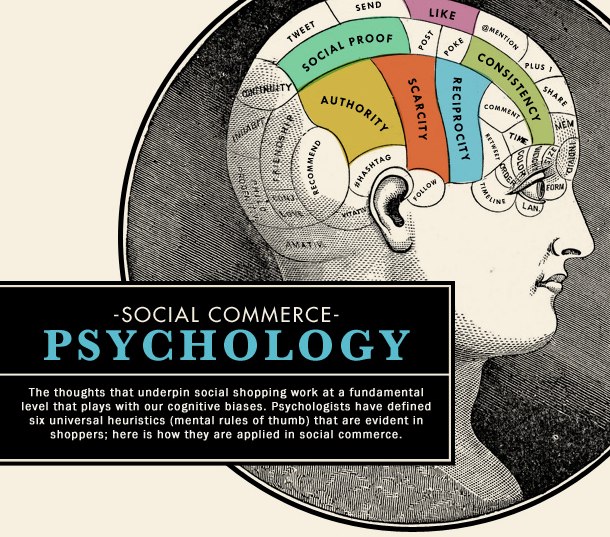
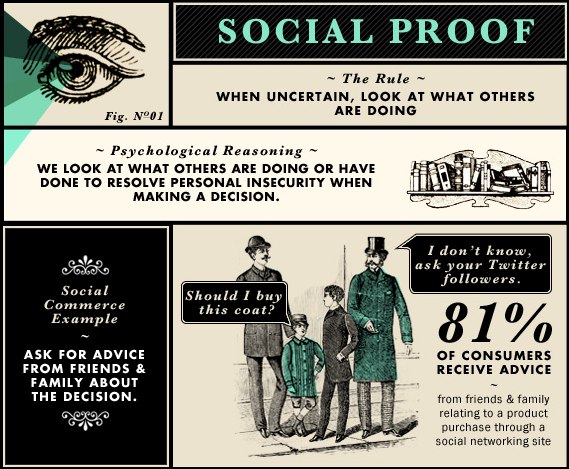
I came across these cool graphics on theFast Company website. The accompanying article is really wordy and sort of reminds me of a Power Point presentation where the dude reads off the slides for the whole meeting. This meeting was brought to you by the Department of Redundancy Department. The slides are self-explanatory and lovely to look at.